Case IH Adds Advanced Diagnostics and Remote Support to 2027 Axial-Flow 160 Combines
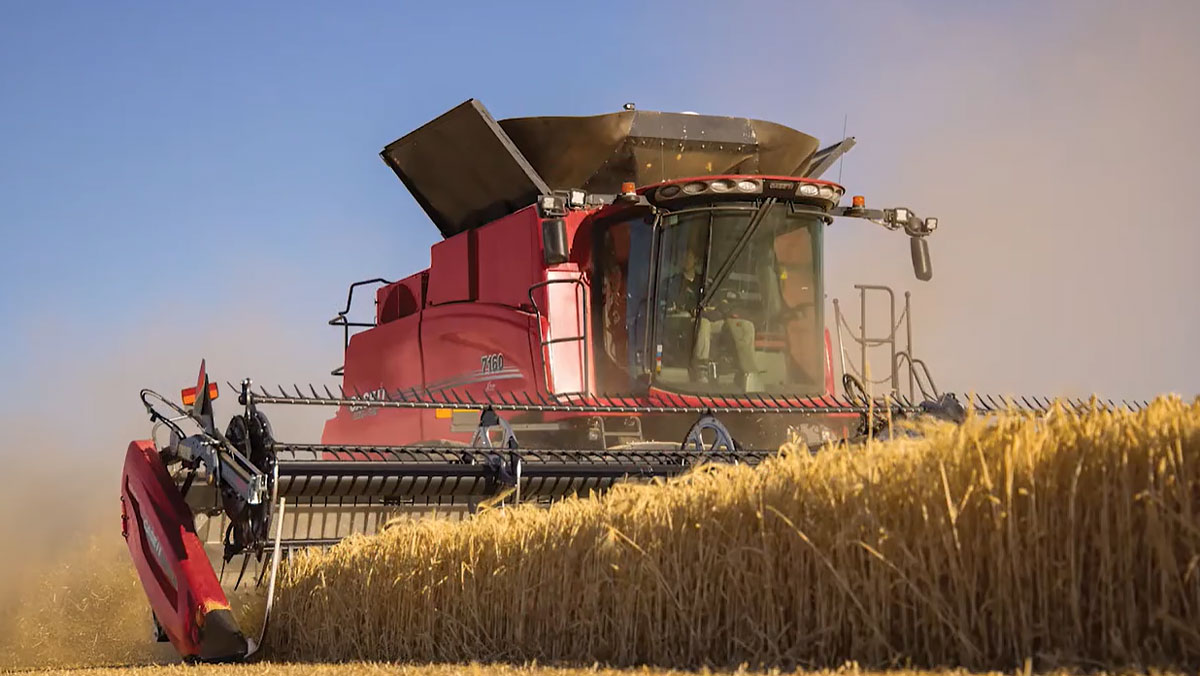
Case IH is upgrading the Axial-Flow 160 Series for Model Year 2027 with a new electronic architecture, dual Pro 1200 displays, enhanced onboard diagnostics and remote support capabilities that could change how operators and technicians identify and respond to combine problems during harvest.
The update applies to the Class 6 and Class 7 Axial-Flow 160 Series and represents more than a typical technology package refresh. Case IH says the new on- and offboard technology suite provides faster data processing, improved diagnostics and tighter integration with connected digital services.
For owners and service technicians, those changes are particularly important. Modern combines increasingly depend on electronic controllers, sensors, displays and communication networks, making the ability to identify a problem remotely potentially as valuable as improvements in harvesting capacity.
Series production of the updated machines is scheduled to begin in July 2026, with initial customer deliveries expected by the end of the third quarter.
New Electronics Improve Diagnostics
At the center of the Model Year 2027 update is an upgraded electronic and technology architecture designed to support more automation, connectivity and machine intelligence.
Case IH specifically identifies improved diagnostics as one of the benefits.
The architecture provides faster processing of machine information and supports remote service functions. When a machine develops a problem during harvest, connected diagnostic information can potentially help an operator, dealer or technician determine what is happening before a service vehicle reaches the field.
This is increasingly important as fault diagnosis becomes more complex.
A modern combine can generate warnings and fault codes from engine and emissions controllers, harvesting systems, hydraulic components, guidance equipment, sensors, displays and communication networks. A fault presented to the operator may therefore be the final symptom of a problem occurring elsewhere in the machine.
Better access to machine data does not eliminate conventional troubleshooting, but it can give technicians considerably more information before physical inspection begins.
Dual Pro 1200 Displays Expand Fault Visibility
The updated Axial-Flow 160 Series receives two Pro 1200 displays.
The displays provide customizable layouts and multitouch controls while allowing machine information and agronomic data to be viewed simultaneously.
From a diagnostic perspective, the more significant additions are advanced diagnostic functions and Remote Display Viewing.
Remote Display Viewing allows authorized support personnel to see what the operator is seeing on the display. That can be particularly useful when an operator encounters a warning, configuration problem or unexpected machine behavior that is difficult to describe over the phone.
Instead of relying entirely on the operator to read fault information or navigate through diagnostic menus, support personnel can potentially examine the display remotely and guide the operator through appropriate checks.
The Pro 1200 system also integrates Harvest Command automation, AccuGuide autoguidance and real-time yield monitoring.
The result is a display system that is becoming both an operator interface and an increasingly important access point into the machine’s electronic systems.
Remote Support Targets Harvest Downtime
The practical value of remote diagnostics becomes particularly clear during harvest.
A combine failure at another time of year may be inconvenient. During a narrow harvest window, several hours of downtime can have significantly greater consequences.
Case IH says the updated architecture enables remote support intended to reduce unnecessary service trips and minimize downtime.
There is an important distinction here. Remote diagnostics cannot repair a failed sensor, damaged wiring harness, hydraulic problem or mechanical component.
What it can potentially improve is the process that occurs before the repair.
If a technician can access relevant machine information remotely, the dealer may be able to determine whether the problem requires immediate field service, whether an operator-level procedure can resolve it, or which components and diagnostic equipment should accompany the technician to the machine.
That can turn the first physical service visit into a repair visit rather than an initial investigation.
More Sensors Increase Diagnostic Dependence
Case IH has also upgraded sensor systems on the Axial-Flow 160 Series to provide more accurate monitoring of key machine parameters.
This supports improved harvesting performance, but it also illustrates a broader change taking place in agricultural equipment.
More sensors provide the control system with more information. That information allows automation systems to make increasingly sophisticated decisions and can help identify developing problems earlier.
The tradeoff is greater dependence on sensors, electrical connections, controllers and communication networks.
A failed sensor or compromised electrical connection can sometimes produce symptoms that appear to indicate a mechanical problem. Understanding the relationship between fault codes, live sensor values and actual machine behavior is therefore becoming increasingly important for technicians working on newer Case IH equipment.
Connectivity Supports Remote Service
The 2027 Axial-Flow 160 also introduces Case IH Connectivity Included, providing connectivity for the lifetime of the modem without recurring subscription fees or renewals.
For precision agriculture, connectivity enables data transfer and fleet management. From a service perspective, persistent connectivity is equally significant because remote support systems become much more useful when operators do not have to maintain a separate connectivity subscription.
Other technology additions include a new Vector Pro receiver, AccuSync real-time data sharing between machines and AccuTurn automated headland turning.
Case IH is also offering flexible technology packages that allow customers to select different levels of automation and connectivity.
Mechanical Updates Add New Monitoring Points
Not every Model Year 2027 change is electronic.
Case IH has added a new cross-auger clutch that allows independent control of the unloading system. The design allows the unloading auger to be emptied more completely, with the goal of reducing grain loss during unloading on the go.
An optional two-speed feeder drive is intended to optimize crop flow under varying harvesting conditions, while a revised concave configuration targets improved performance in high-moisture crops.
These systems introduce additional operating states that the machine’s controllers and sensors must monitor. As mechanical functions become more closely integrated with electronic controls, diagnostic procedures increasingly require technicians to understand both sides of the system.
A warning related to a harvesting function, for example, may originate from the mechanical component itself, its actuator, a position or speed sensor, wiring, a controller or communication between controllers.
What This Means for Case IH Diagnostics
The most significant part of the Axial-Flow 160 update may not be any individual feature.
It is the continuing shift toward connected diagnostics.
Agricultural equipment troubleshooting was once dominated by mechanical inspection and hydraulic pressure testing. Those skills remain essential, but newer machines increasingly add another layer involving controller data, software, CAN communication, sensor values and remote connectivity.
Case IH appears to be using connectivity not simply to collect agronomic data but increasingly as part of the service infrastructure surrounding the machine.
That has clear advantages. Earlier fault detection, remote display access and better information before a technician arrives can reduce diagnostic time.
However, it also means owners and independent technicians will increasingly depend on access to accurate fault-code information, diagnostic procedures and electronic system documentation.
For owners of Model Year 2027 machines, knowing what a fault code means will often be only the beginning of the troubleshooting process. Understanding which controller generated it, what sensor data triggered it and how related systems communicate will become increasingly important.
About Case IH
Case IH is an agricultural equipment brand of CNH Industrial N.V. The Case IH name was established in 1985 following the combination of J.I. Case and the agricultural operations of International Harvester, bringing together equipment lineages that extend back to the 19th century.
Today, Case IH sells tractors, combines, harvesting equipment, sprayers, application equipment and precision agriculture technologies worldwide.
Its current combine portfolio includes Axial-Flow machines based on the single-rotor harvesting concept introduced by International Harvester in 1977. The technology has therefore been used in commercial harvesting equipment for nearly five decades.
Case IH is part of CNH, a global equipment manufacturer whose agricultural portfolio also includes New Holland Agriculture and STEYR. CNH reported approximately $19.84 billion in consolidated revenue for 2024 and operates an industrial and commercial network spanning major agricultural markets worldwide.
The Model Year 2027 Axial-Flow 160 update continues Case IH’s broader move toward connected equipment in which onboard electronics, precision technology, remote support and machine diagnostics increasingly operate as parts of a single system.