Case IH Farmall 70A Code 3808: Engine Drops to Idle After Running — What the Fault Code Actually Means
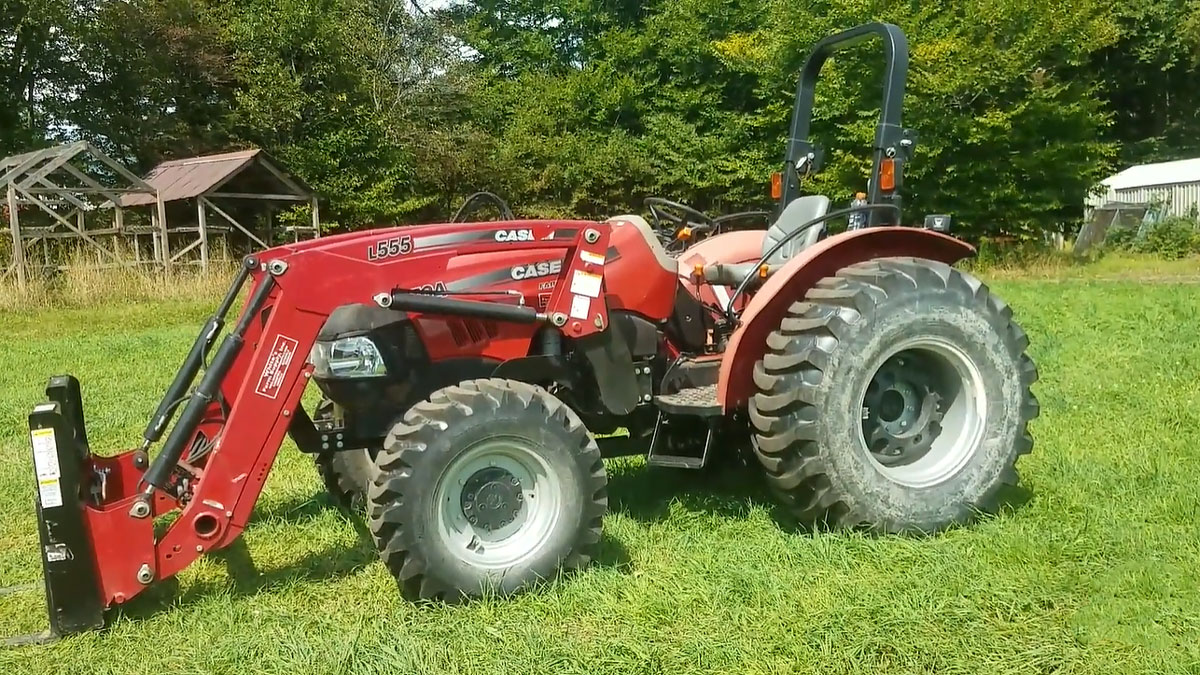
On some Case IH Farmall 70A tractors, the engine runs normally for a stretch and then unexpectedly drops back to idle on its own, accompanied by fault code 3808 on the dash. It’s a disruptive symptom during loader work or PTO-driven tasks, and the instinct is usually to start with the fuel filter and supply lines — cleaning the primary filter base, clearing any restriction between the tank and the engine. That step is worth doing, but it only covers the first stage of a much longer fuel-delivery chain, and when the fault persists after it, the cause typically lies further downstream.
There’s also a tendency to blame this behavior on instrument-cluster software, since a separate, well-documented firmware issue on some Farmall A and New Holland Workmaster tractors causes exactly this kind of unexpected reversion from operating RPM to idle. The two problems look identical from the seat, but they come from entirely different systems, and treating them as the same thing wastes diagnostic time.
What Code 3808 Actually Represents
Case IH’s dashboard fault numbers correspond to underlying ECU diagnostic codes, and 3808 maps to controller code 455-03, defined in service documentation as: “High pressure pump fuel delivery quantity at low idle is too high.”
The logic behind the code is straightforward once unpacked. The ECU continuously compares requested fuel rail pressure against actual delivered pressure. At low idle, if more fuel appears to be reaching the rail than the ECU calculates it should be — in effect, a mismatch between commanded and actual pressure — the system assumes a leak somewhere in the high-pressure circuit and sets the fault. It isn’t a code about idle speed control; it’s a pressure-and-delivery diagnostic that happens to surface most reliably at idle, where the tolerance for error is tightest.
One point in the service literature is easy to miss: other active faults can trigger this code as a secondary symptom rather than a root cause. Standard procedure calls for pulling all active codes through the Electronic Service Tool (EST) first, resolving anything else that’s flagged, and only then returning to 455-03 if it’s still present. So this code shouldn’t automatically be treated as the primary fault — it can just be the most visible one.
The Fuel System Involved
The Farmall 70A runs a 3-cylinder, 2.2-liter FPT turbocharged diesel with electronic high-pressure common rail injection. It meets Tier 4B/Final emissions requirements through Cooled Exhaust Gas Recirculation (CEGR) alone — no DPF, and no regeneration cycle. It’s also worth being explicit that Case IH’s small utility A-series platform, including the 70A, has no SCR or DEF system at all. That rules out an entire category of possible causes immediately: no urea dosing, no NOx sensors, no DEF tank chemistry to worry about. Whatever produces this fault lives entirely within the diesel fuel-delivery path, from tank to injector.
Where This Fault Can Originate
Case IH service documentation lists eight possible failure points behind code 455-03, spanning the full high-pressure fuel circuit rather than pointing at a single likely part:
- Low-pressure fuel system fault — a clogged filter, a leak, or a blockage upstream of the high-pressure side.
- Charge/gear pump fault — reduced efficiency, or a clogged or damaged supply line.
- Fuel metering unit not opening fully.
- High-pressure pump operating at reduced efficiency.
- Fuel injectors stuck open or leaking internally.
- Pressure relief valve leaking.
- Fuel rail pressure sensor drifted out of calibration or developing a leak.
- A fault within the ECU firmware itself.
Cleaning the primary filter and clearing the supply line only addresses roughly the first item on that list. When the fault persists past that step, attention generally needs to shift downstream — toward the pressure sensor, an injector leaking internally, or a relief valve not holding — since none of those would improve from filter or line service alone.
Why the ADIC Firmware Issue Is a Separate Matter
The instrument cluster (ADIC) firmware problem some owners bring up is a real, documented issue on its own: certain tractors randomly drop from operating RPM to idle due to a cluster software bug, reportedly corrected at the factory going into 2016 or 2017 production, with dealers able to check a serial number against update status and apply the fix in roughly twenty minutes if it’s missing. But that’s a display and control-logic issue confined to the instrument cluster — it doesn’t set code 455-03, and updating it wouldn’t clear a genuine fuel-pressure fault. The overlap in symptoms (normal operation, then an unexplained drop to idle) is what causes the confusion, not any shared mechanical cause.
Checking the ADIC firmware revision against the tractor’s serial number is still a reasonable step, mostly to eliminate it as a variable. It should run alongside a fuel-system diagnosis, though, not substitute for one.
Diagnostic Steps
- Pull all active codes through EST, not just 3808, since service documentation treats this code as one that can be set by another active fault. Resolving a separate underlying issue may clear 3808 without any direct fuel-system repair.
- Compare live fuel rail pressure against the commanded value at idle using EST — this is the exact parameter the fault is built around, and it will show whether the mismatch is genuine or whether a sensor is misreporting it.
- Inspect the fuel rail pressure sensor for drift or a physical leak before assuming a pump or injector failure, since it’s a faster and lower-cost check than pulling injectors or the high-pressure pump.
- Test the injectors for internal leakage or a stuck-open condition if the sensor and rail pressure both check out — a leaking injector produces exactly this symptom, since more fuel reaches the rail than the ECU expects at idle.
- Confirm the ADIC firmware revision separately by serial number through a dealer, to rule the cluster issue in or out — treated as a secondary check rather than the primary fix.
Because the high-pressure fuel system carries extremely high pressures, diagnosis past the initial filter and line checks isn’t well suited to casual troubleshooting. Case IH’s own service documentation warns specifically about injury risk from high-pressure fuel leaks, and pressure testing or injector work is better handled by someone equipped for it who knows to stay well clear of any suspected leak point.