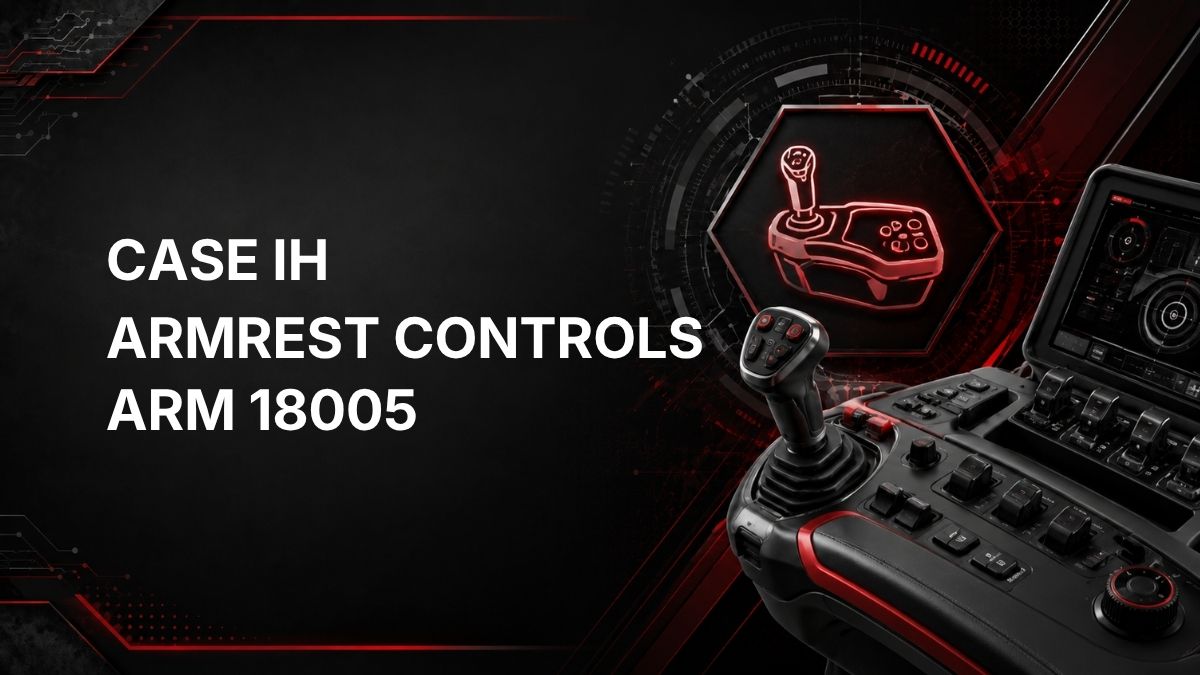
Case IH Tractor ARM 18005 Fault Code: Engine Droop Control Voltage Too Low
What ARM 18005 Means
ARM 18005 is a Case IH tractor fault code from the ARM controller, which relates to armrest controls. The official description is: Engine droop control – voltage too low.
In practical terms, this means the ARM controller has detected a voltage signal for the engine droop control circuit that is lower than expected. The code points to a low-voltage condition in that control input or related circuit, not necessarily a confirmed failure of one specific part.
Likely Symptoms
Symptoms can vary depending on tractor configuration and operating conditions. Possible symptoms may include:
- ARM 18005 displayed on the tractor monitor or diagnostic screen
- Engine droop control not responding as expected
- Reduced or inconsistent response from related armrest control functions
- Warning lights, alarms, or stored fault history
- No obvious drivability issue other than the active or stored fault code
Because the source description only identifies a low-voltage condition, symptoms should not be assumed without confirming the fault on the machine.
Possible Causes
Possible causes of ARM 18005 may include issues that can produce a low-voltage signal in the engine droop control circuit, such as:
- Poor electrical connection in the related control circuit
- Loose, damaged, corroded, or contaminated connector terminals
- Damaged wiring or harness condition affecting signal voltage
- A control input or switch/potentiometer signal that is out of range
- Low supply voltage or poor ground affecting the ARM controller circuit
- An internal controller or component fault, if wiring and external circuits test correctly
These are general diagnostic possibilities. The exact cause should be verified with the correct Case IH service information for the specific tractor.
Diagnostic Checks
1. Confirm the Fault Code
Verify that the displayed or stored code is ARM 18005. Note whether it is active or inactive, and record when it appears, such as at startup, during engine speed changes, or when using armrest controls.
2. Inspect Visible Wiring and Connectors
Check accessible harnesses and connectors related to the armrest control area and engine droop control circuit. Look for obvious issues such as loose plugs, damaged insulation, rubbed wiring, moisture intrusion, corrosion, or bent terminals.
3. Check Power and Ground Condition
A low-voltage fault can be caused by poor power supply or grounding. Inspect battery condition, main electrical connections, and visible ground points for looseness or corrosion. Do not assume the droop control component is faulty until basic electrical integrity has been checked.
4. Avoid Guessing at Parts
Replacing controls or modules without testing can be expensive and may not fix the fault. Since ARM 18005 only indicates that voltage is too low, the circuit should be tested before any component is replaced.
Repair Guidance
Repairs should be based on the results of inspection and electrical testing. Practical repair actions may include cleaning and securing connectors, repairing damaged wiring, correcting poor power or ground connections, or replacing a confirmed faulty control component.
If the fault remains active after basic checks, dealer diagnostic equipment or a qualified technician may be required. Case IH service tools can help view live controller data, confirm whether the ARM controller is receiving the correct signal, and follow the manufacturer diagnostic path for the specific tractor.
When to Call a Technician
Contact a qualified technician or Case IH dealer if:
- The code returns immediately after clearing
- The fault affects tractor operation or engine response
- Wiring damage is found but the circuit path is unclear
- Controller data or calibration checks are needed
- You do not have the correct electrical test equipment or service information
Need Help With This Fault Code? Find a Case IH Dealer Near You
Summary
Case IH ARM 18005 means the ARM controller has detected engine droop control voltage too low. The most sensible approach is to confirm the code, inspect connectors and wiring, check power and ground integrity, and use proper diagnostics before replacing parts. If the cause is not obvious, dealer-level diagnostic support may be needed.