Case IH Tractor Fault Code DCU 19019: Catalyst Temperature Sensor Circuit High
What DCU 19019 Means
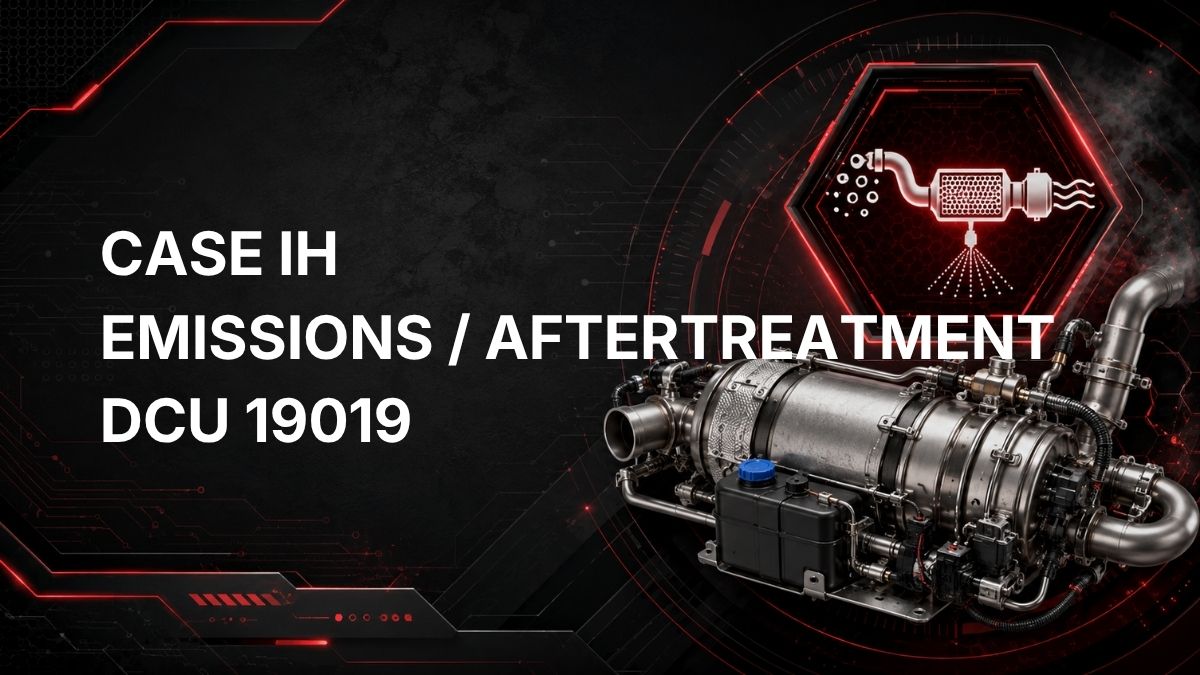
On a Case IH tractor, fault code DCU 19019 is an emissions/aftertreatment code from the DCU. The official description is: Temperature sensor before catalyst electrical signal high — P0428 Catalyst Temperature Sensor Circuit High.
In practical terms, the DCU is detecting a signal from the temperature sensor before the catalyst that is higher than the expected electrical range. This points to an electrical circuit issue or a sensor signal problem related to the pre-catalyst temperature sensor. The code does not, by itself, prove that the catalyst has failed.
Likely Symptoms
Symptoms can vary by tractor configuration and operating conditions. Possible symptoms include:
- Emissions or engine warning light on the display
- Stored or active DCU fault code
- Reduced engine performance or torque limitation if the system enters a protection strategy
- Aftertreatment regeneration may be inhibited, delayed, or not operate normally
- No obvious drivability symptoms other than the warning message
Possible Causes
Because the official fault points to a high electrical signal, likely causes are usually related to the sensor circuit rather than the mechanical catalyst itself. Possible causes include:
- Faulty temperature sensor before the catalyst
- Damaged wiring in the sensor circuit
- Connector corrosion, poor terminal contact, or loose connection
- Short to voltage in the sensor signal circuit
- Open or high-resistance ground/reference circuit, depending on system design
- Moisture, contamination, or heat damage affecting the connector or harness
- DCU input issue, less common and requiring proper diagnosis before replacement
Diagnostic Checks
1. Confirm the Fault
Record the active and stored fault codes before clearing anything. If other aftertreatment or sensor supply codes are present, diagnose them in a logical order because they may affect the same circuit or controller inputs.
2. Inspect the Sensor and Connector
Visually inspect the temperature sensor before the catalyst and its electrical connector. Look for loose plugs, damaged locking tabs, corrosion, moisture, bent terminals, pulled wires, or signs of heat damage.
3. Inspect the Harness
Follow the accessible harness routing where possible and check for rubbing, pinched wires, melted insulation, previous repair damage, or contact with sharp edges or hot exhaust components. Do not assume the sensor is bad until the circuit has been checked.
4. Check Live Data if Available
With suitable diagnostic equipment, compare the pre-catalyst temperature sensor reading to expected behavior for the machine state. A reading that is implausibly high, fixed, or inconsistent with nearby aftertreatment temperature readings can help confirm an electrical signal fault.
5. Perform Circuit Testing
Electrical testing may be required to check the signal, reference, and ground circuits according to the correct Case IH service information. Use the proper wiring diagram and connector pin information for the exact tractor. Do not guess at pin locations or apply voltage to sensor circuits.
Repair Guidance
Repair should be based on test results. Common corrective actions may include cleaning and securing connectors, repairing damaged wiring, correcting poor terminal contact, or replacing the temperature sensor before the catalyst if it is confirmed faulty.
After repairs, clear the fault code with appropriate diagnostic equipment and operate the tractor under conditions that allow the DCU to recheck the circuit. Confirm that DCU 19019 does not return and that no related aftertreatment codes remain active.
When Dealer Diagnostics May Be Required
Dealer diagnostic equipment or a qualified technician may be required if the fault remains active, if live aftertreatment data is needed, if circuit tests require factory wiring information, or if the DCU requires guided troubleshooting. Professional diagnosis is also recommended before replacing expensive aftertreatment or controller components.
Key Takeaway
Case IH DCU 19019 indicates a high electrical signal from the temperature sensor before the catalyst. Treat it as a sensor circuit fault first: inspect the connector and wiring, confirm readings with diagnostics, and replace parts only after testing supports the repair.