Case IH Tractor DCU 19011 Fault Code Guide
What DCU 19011 Means
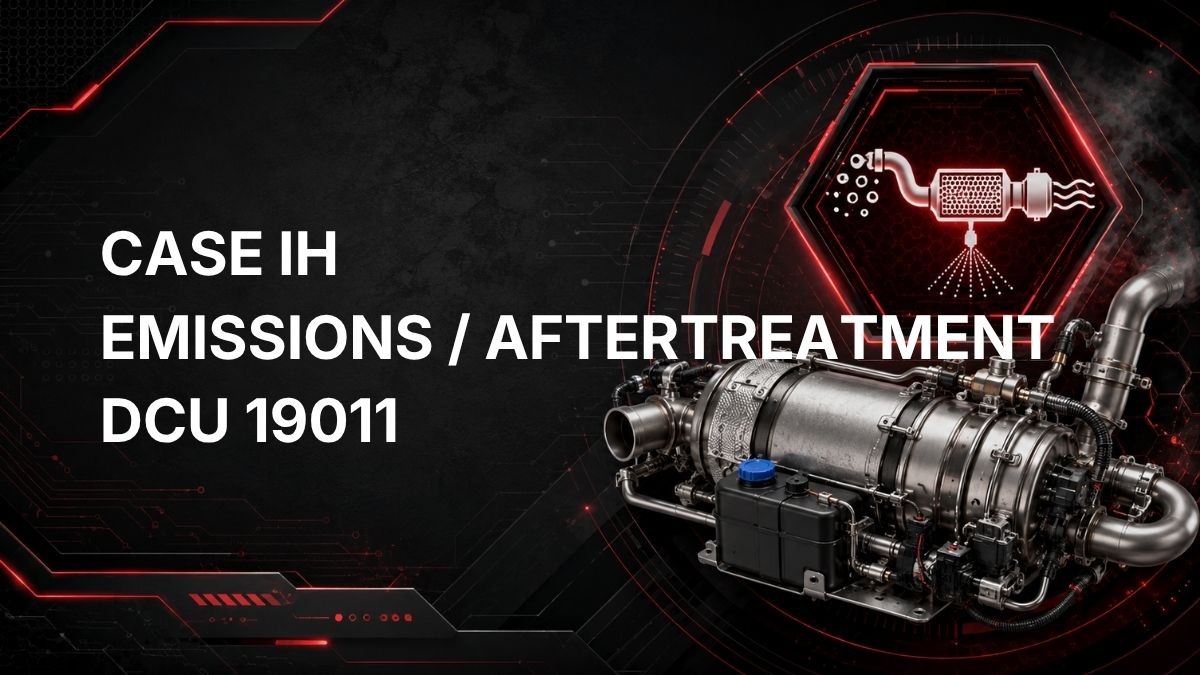
DCU 19011 is a Case IH tractor fault code from the DCU controller in the emissions / aftertreatment category.
Official description: Temperature sensor after catalyst (electrical) | signal low | P042C Catalyst Temperature Sensor Circuit Low.
In practical terms, this code indicates that the DCU is seeing a low electrical signal from the temperature sensor circuit used after the catalyst. The code points to an electrical signal problem in that sensor circuit, not necessarily a confirmed failed sensor by itself.
Likely Symptoms
Symptoms can vary depending on the tractor, software, operating conditions, and any other active faults. Possible symptoms include:
- Emissions or engine warning light on the display
- DCU 19011 or P042C stored as an active or stored fault
- Aftertreatment-related warnings
- Reduced engine performance or derate in some cases
- Regeneration or aftertreatment operation may be affected
If other aftertreatment or sensor codes are present, they should be considered as part of the same diagnostic event rather than treated separately without testing.
Possible Causes
Because the official description identifies a low signal in the catalyst temperature sensor circuit, likely causes may include:
- Faulty temperature sensor after the catalyst
- Damaged, rubbed, pinched, or broken wiring in the sensor circuit
- Short to ground or another low-voltage condition on the signal wire
- Loose, contaminated, corroded, or moisture-affected connector terminals
- Poor terminal contact or connector fit
- DCU input or control-side fault, less common but possible after circuit checks
Do not replace parts based only on the fault code. The code identifies the circuit condition that the controller detected; testing is needed to confirm the failed part or wiring issue.
Diagnostic Checks
1. Confirm the Fault
- Record the exact fault code, controller, and whether the fault is active or stored.
- Check for additional emissions, temperature sensor, power supply, or communication faults.
- Note when the fault appears, such as at key-on, during operation, or during aftertreatment activity.
2. Inspect the Sensor Circuit
- Inspect accessible wiring and connectors related to the after-catalyst temperature sensor circuit.
- Look for heat damage, abrasion, broken insulation, loose connectors, corrosion, bent pins, or moisture intrusion.
- Make sure connectors are fully seated and terminals are not pushed back or spread.
3. Use Diagnostic Data Where Available
- Use the appropriate service information and diagnostic tooling to view sensor data and circuit status.
- Compare the fault behavior with key-on and running conditions as directed by Case IH service procedures.
- A qualified technician may need to test the circuit for continuity, shorts, reference supply, ground integrity, and signal behavior.
Specific measured values and pin tests should come from the correct Case IH service manual or diagnostic software for the tractor being repaired.
Repair Guidance
Repairs should be based on test results. Depending on what the diagnosis finds, appropriate repair actions may include:
- Repairing damaged wiring or harness sections
- Cleaning, drying, securing, or repairing connector terminals
- Replacing the temperature sensor after the catalyst if testing confirms it is faulty
- Addressing DCU-side concerns only after the sensor and wiring circuit have been verified
After repairs, clear the fault codes with suitable diagnostic equipment and operate the tractor under the required conditions to confirm that DCU 19011 does not return.
When Dealer Diagnostics May Be Required
Dealer diagnostic equipment or a qualified technician may be required if:
- The fault remains active after basic visual checks
- Multiple aftertreatment or DCU faults are present
- Live data, guided tests, or controller-level diagnostics are needed
- The tractor has entered a derate or emissions-related lockout condition
- Wiring tests require official pinouts or service procedures
Because DCU 19011 involves the emissions and aftertreatment system, accurate diagnosis is important. Avoid bypassing emissions components or making unverified repairs, as this can create additional faults and may violate emissions regulations.