Case IH Tractor DCU 19010 Fault Code Guide
What DCU 19010 Means
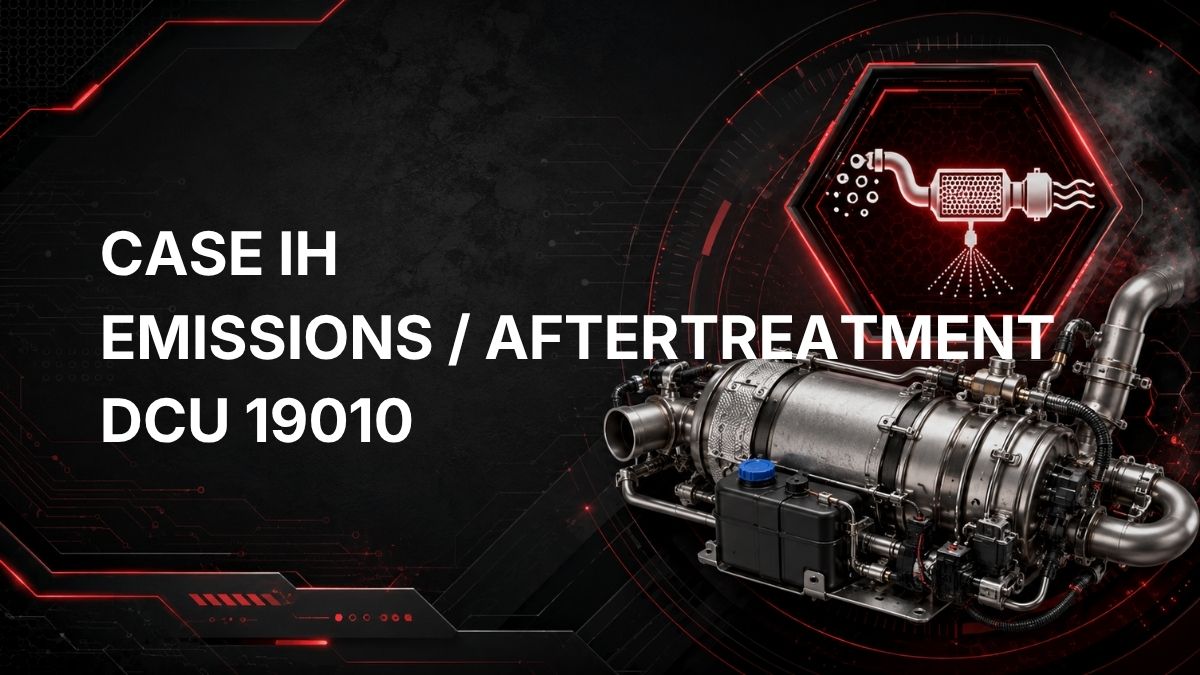
On a Case IH tractor, fault code DCU 19010 relates to the emissions and aftertreatment system. The official description is: Temperature sensor after catalyst (electrical) — signal high — P042D Catalyst Temperature Sensor Circuit High.
In practical terms, the DCU has detected that the electrical signal from the temperature sensor after the catalyst is higher than expected. This points to an electrical circuit issue or sensor signal problem rather than proving that the exhaust temperature itself is too high.
Likely Symptoms
Symptoms can vary by tractor configuration and whether the fault is active or stored. Possible operator-observed symptoms may include:
- Emissions or aftertreatment warning on the display
- Check engine or service warning lamp
- Fault code DCU 19010 stored in the controller
- Reduced engine power or derate if the system determines emissions control is affected
- Regeneration behavior may be limited, delayed, or affected depending on the tractor system strategy
These symptoms are not guaranteed. Always confirm the active fault status before replacing parts.
Possible Causes
Because the official description identifies an electrical high signal condition, likely causes include:
- Faulty temperature sensor after the catalyst
- Open circuit, high resistance, or poor connection in the sensor wiring
- Signal wire shorted to voltage
- Corrosion, moisture, loose pins, or damaged terminals at a connector
- Harness damage from heat, vibration, rubbing, or previous repairs
- Less commonly, a controller input issue or software-related concern
Do not assume the sensor is defective until the circuit has been checked. A wiring or connector problem can create the same high-signal fault.
Diagnostic Checks
1. Confirm the Fault
- Record the full fault code, controller name, and any related codes.
- Check whether DCU 19010 is active, intermittent, or stored history.
- Note the operating conditions when the warning appeared, if available.
2. Inspect the Sensor Circuit
- Visually inspect the wiring and connectors for the temperature sensor after the catalyst.
- Look for loose connectors, corrosion, bent pins, damaged insulation, heat damage, or rubbed-through wiring.
- Check that the harness is properly secured and not under tension.
3. Check Electrical Integrity
- Use the correct Case IH service information for pin identification and test points.
- Check for opens, shorts to voltage, shorts to ground, and poor terminal contact as directed by the service procedure.
- Compare live sensor data with expected behavior using suitable diagnostic equipment.
Avoid probing connectors in a way that spreads terminals or creates new faults.
Repair Guidance
Repairs should be based on diagnostic results, not on the fault code alone. Depending on what is found, corrective action may include:
- Cleaning and securing an affected connector if contamination or poor contact is found
- Repairing damaged wiring using approved repair methods
- Replacing the temperature sensor after the catalyst if testing confirms a sensor fault
- Updating or evaluating controller-related concerns only when supported by service information or dealer diagnostics
After repairs, clear the fault code and operate the tractor under appropriate conditions to confirm that DCU 19010 does not return.
When Dealer Diagnostics May Be Required
Dealer diagnostic equipment or a qualified technician may be required if:
- The fault remains active after basic wiring and connector checks
- Live aftertreatment temperature data must be reviewed
- Guided electrical tests or controller-specific procedures are needed
- The tractor is in derate or has multiple emissions-related fault codes
- Controller programming, calibration, or advanced aftertreatment diagnostics are suspected
Because this is an emissions and aftertreatment fault, do not bypass sensors or disable emissions components. Use the proper Case IH service information and repair the cause of the high sensor signal.